


Admission Rules
- The admission process requires preparing a complete set of essential documents, including: a copy of a valid international passport, a copy of the graduation certificate with transcript, a certificate of recognition, and a personal photograph (3 × 4 cm).
All documents must be translated into Russian and officially notarized or certified through the consulate. - Entrance Examinations
Applicants may take the entrance examinations remotely (online) or in person at the university (offline). - Tuition Fee Payment.
- A medical certificate confirming the absence of HIV infection and the absence of any medical contraindications for studying in the country is also required.
Russian Student Visa
A Russian student visa is mandatory for most international students wishing to study in Russia, as Russia is not a member of the EU or EFTA, therefore the visa-free entry privilege for European students does not apply.
Required Documents for a Russian Student Visa:
- A valid passport that remains valid for at least 18 months from the visa issue date and contains at least two blank pages.
• An official invitation letter issued by the chosen university.
• A completed visa application form.
• An HIV-negative certificate issued no more than 90 days prior to submission.
• A notarized parental consent letter for applicants under 18 years old.
• A photograph sized 3.5 × 4.5 cm.
This is a general list of required documents. Applicants are advised to contact the Russian Embassy or Consulate in their country for updated requirements and detailed procedures.
Achievements
- Kazan Federal University participates in the Russian Academic Excellence Project 5-100, which was launched to strengthen the global competitiveness of leading Russian universities in research and education.
- In 2019, the university was ranked among the top 125 universities worldwide in the field of Education according to the Times Higher Education Rankings. It was also placed among the top 250 universities globally in the same field according to the QS International Rankings.
- Kazan Federal University is also recognized as one of the three leading institutions in Russia specializing in teacher education and training.
- In addition, the university is an active member of one of the most authoritative international organizations dedicated to university rankings and academic performance evaluation.
About the University, International Cooperation & Educational Process
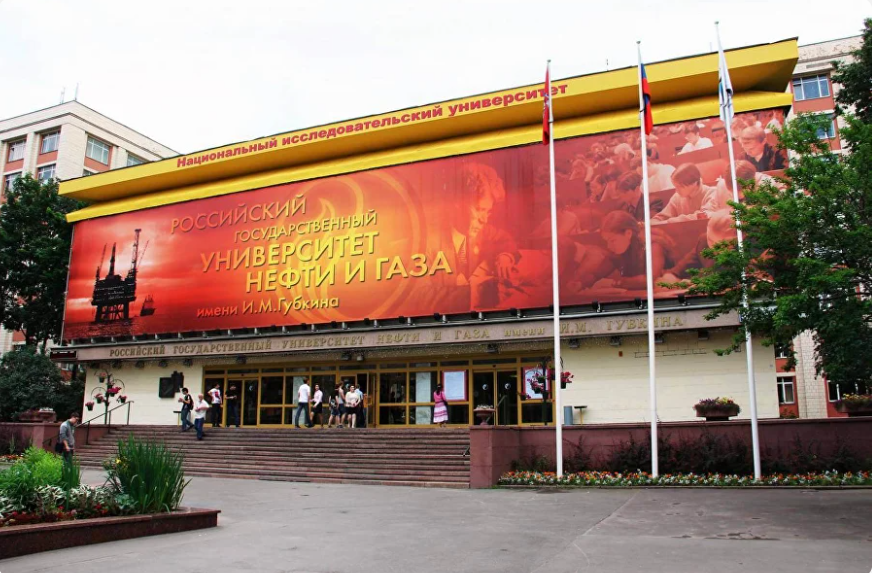
- The National University of Oil and Gas “Gubkin University” is considered the leading academic institution in Russia specializing in oil and gas education, playing a key role in preparing highly qualified professionals for this vital industry.
- The university is also recognized as a major national research center, contributing significantly to the development of the Russian oil and gas sector through advanced scientific research and specialized professional training. According to research income indicators, Gubkin University ranks among the leading industrial universities in Russia.
- Founded in 1930 by the prominent Russian scientist and academician Ivan Gubkin, the university has graduated more than 90,000 engineers and specialists, in addition to numerous holders of Candidate of Sciences and Doctor of Sciences degrees.
- Gubkin University adopts innovative educational methods and an interdisciplinary approach to learning. It also provides advanced training infrastructure based on interactive simulators, computer models, and digital systems that replicate real professional environments.
- Bachelor’s and Specialist Programs
The university awards a Bachelor’s degree after four years of study, while Specialist programs require between five and five and a half years of university education.
Applicants to both programs must hold a secondary school diploma. - Master’s Programs
Master’s programs last for two years and are designed to provide students with advanced and specialized academic knowledge in their chosen fields.
Admission requires a Bachelor’s or Specialist degree. - Postgraduate Programs
Postgraduate studies are aimed at preparing academic and research professionals, and graduates are awarded a PhD degree.
Applicants must hold a Master’s or Specialist degree to enroll. - The university also offers a two-level postgraduate system, where students study for 3 to 4 years to obtain the “Candidate of Sciences” degree, followed by an additional 5 to 15 years to earn the “Doctor of Sciences” degree. Both qualifications are considered equivalent to PhD-level academic degrees according to international standards.